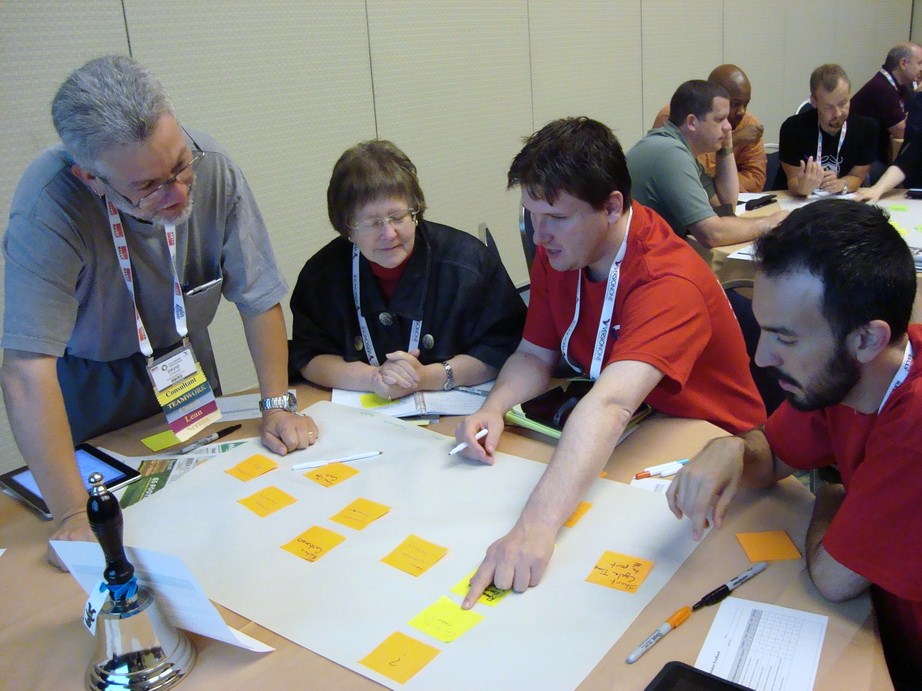
We’ve had lots of fun at Agile 2010 and here are the materials for our two presentations. Download and have fun!
– Portia and Pascal
– HATE SOMETHING, CHANGE SOMETHING, MAKE SOMETHING BETTER –
Sunday, 22 August 2010
We’ve had lots of fun at Agile 2010 and here are the materials for our two presentations. Download and have fun!
– Portia and Pascal
Tuesday, 10 August 2010
You’re a mischievous wooden little boy who dreams of becoming a real manager. Now that your dream has come true, you find yourself stuck inside a whale’s stomach, stewing in a jacuzzi of digestive juices. The satanic little voice in your head says everything will be ok, but your protruding nose knows otherwise.
Join us in the latest Agile Fairytale being told this Tuesday of ‘Pinochhio – On Becoming a Lean Leader’ at Agile 2010.
You’ll embark on an journey where you’ll encounter two types of characters: the Baddies, such as Gideon and Foulfellow, who will try to lead you astray with temptations, and the Goodies, such as Gepetto, the Blue Fairy and Jiminy Cricket, who will help you find your way back to your goal.
You’ll get the chance to put the tools into practice and come up with 3 actions to take away to try out back at work.
The Lean Leadership Tools we’ll share with you are:
Including those of a Learning Organisation:
All of which are guided by:
Join us to acquire these Lean Leadership tools and give your story a Happy Ending with the help of talking animals.
The session will be held at 13.30 – 15.00 in the Southern Hemisphere IV/V (Lobby Level) of the Dolphin Hotel in Orlando. I’ll be co-presenting this interactive session with Pascal Van Cauwenberghe. Come early to get a good seat!
Sunday, 11 July 2010

“What do you do after you’ve won the World Cup? There’s nothing after that.”
I know I don’t know much about football, but I know what I see. Discipline, Teamwork and Common Goal. That’s what I see in a good game of football. And what do I mean by a “good game”? I mean a game played by a real team as opposed to a disparate and desperate group of individuals.
How would I define Discipline? Practice, practice, practice. The kind of practice that amounts to what Malcolm Gladwell calls “The 10,000 Hour Rule“. The kind of practice that makes your head and body ache all over but you still continue to strive because you know the prize outweighs the cost.
How would I define Teamwork? When everyone on the team sets aside their ego to get the job done. And not just done, but done well. So well that it makes you swell with pride. Great teamwork means working hard when people are together and when they are apart. A winning football team doesn’t just wait to play together for the several weeks in the runup before the cup (that’s far too late to be learning how to play together and still expect to win the World Cup). They create opportunities to get team practice in. And, of course, everyone learns. From each other. For the team. Even if that means exposing one’s weaknesses and our own lack of knowledge, skills and experience.
How would I define Common Goal? One that everyone in the team truly believes in. One that inspires each individual to be the best they can be so that, together, they can become more than the sum of their parts. And there’ll be lots of passing of the ball, like the way Xavi plays, because there is no single star or hero in a winning team. The brilliance lies in the team playing to each other’s strengths and strengthening individual weaknesses. The gleam comes from the team achieving the Common Goal together.
What do you do after you’ve won the World Cup? Will you tie up your laces and hang up your boots? Will that be it? Of course not. I know I don’t know much about football, but I know what life shows me about winners and losers.
Winners carry on winning, moving the goal posts further out with each win, like Armstrong and Ferrera, winning not just once, but many times because the goal is much more than just the space between the posts.
Winners turn their expertise into repeatable formulae, achieving “conscious competence of unconscious competence“, so that they become better than they were yesterday every day. And true winners help others become winners, too.
Sunday, 4 July 2010
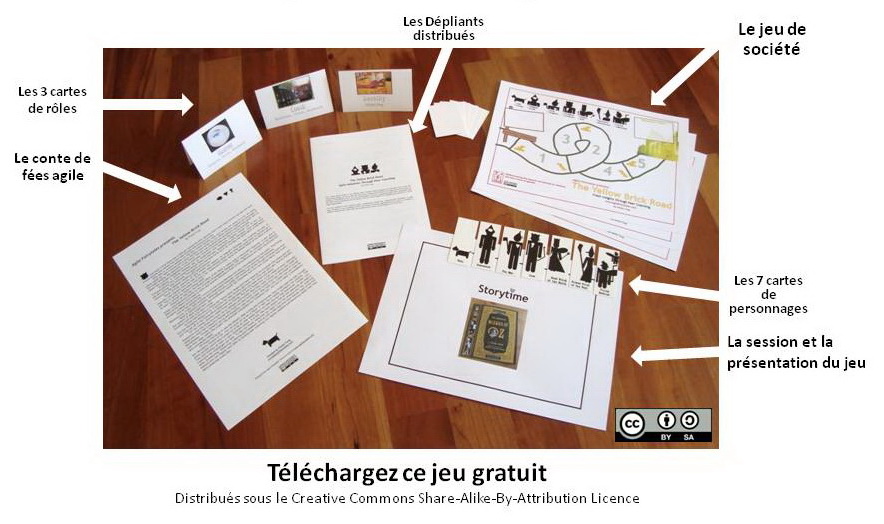
Ouais! L’édition française de La Route de Brique Jaune est arrivéé finalement. Visitez www.agilefairytales.com et téléchargéz ce jeu gratuit. Dépensez des minutes de merveilles avec votre équipe et vos amies pour apprendre comment faire le co-coaching (le ‘peer coaching’ en anglais). A bientôt!
Wednesday, 23 June 2010
When it comes to organisational change, one of the most overlooked factors is the impact individuals have on an organisation. After all, organisational change begins with the individual. Another commonly overlooked fact is that we can only change ourselves. That’s why much of this blog focuses on working with groups, teams and individuals.
One of the things I enjoy most about organisational change is the element of surprise. Others would describe this as ‘uncertainty’. While others may fear it, I choose to embrace it. I strive to turn every challenge as an opportunity. A chance to learn and improve. From where I’m standing, we’re surrounded by an abundance of opportunities.
I’ve run the XP Game almost 50 times and the most common assumptions among the players is that they assume each team is competing with another. If they ask, I highlight the fact that I’ve never mentioned this as a rule and that, in fact, they are all teams working for the same organisation. This statement is usually followed by a brief silence as individuals process the information. Nontheless, time and time and again, teams choose to continue to compete against one another, usually to the detriment of the organisation as a whole.
One of the reasons people choose to do this is because staying within your comfort zone is far easier than working together with those outside of your team. What’s not immediately obvious is that the longer you stay in your comfort zone, the less likely you’ll encounter new experiences and pick up new skills as well as develop existing ones to better leverage the change that lies ahead. After all, change will happen around you, regardless of whether or not you are ready to change.
One great way to embrace change is to gain new experiences, develop new skills and acquire new ones. This means that when the change finally happens, you’ll be prepared to get the most out of the change. Better still, you’ll be helping to instigate and shape the change.
So imagine my surprise, when the 3 teams with whom I was playing The XP Game last week decided to deliver value together instead of competing against one another. What’s remarkable is that, in spite of the daunting challenge of collaboration (‘I’m not sure it’s possible’, ‘It’s going to make things much harder to manage’, ‘I’m afraid we’ll fail’), the 3 teams continued to come up with ideas of how to make things work better. And they did not stop there. This has never happened before in all my experience of running this learning game.
In spite of a few clamorous voices that continued to express fear, doubt and uncertainty, the three teams continued as one. Together, they planned out the work and re-organised themselves to deliver as much as value as they could. Then they put their plan into action.
The outcome? In Round 1, when the 3 teams worked independently, collectively they achieved a combined velocity of 820 story points. In Round 2, when the 3 teams worked together from a centralised backlog their velocity reduced to 720 story points. Based on what I saw so far, I predicted that the 3 teams working together would match their combined velocity in round 1 by round 3 or 4 and quickly exceed it as they became better at collaboration. That is a small short term cost for a significant longer term return on investment. After all, all good things come at a price.
I still remember, as though it were yesterday, the moment near the beginning of the course, when I distilled the essence of what Agile meant in two simple words. “Immer besser”. Meaning literally “always better” in German. And that was the one thought that kept everyone together and spurred them on.
Two simple words. Immer besser. To emphasise the importance of continuous learning and improvement, I also drew a contrast between thinking in terms of being “richtig” or “falsch” (“right” or “wrong”) with “immer besser”. In my experience, the most successful individuals, teams and organisations are those who care more about becoming better than who got things right or wrong.
How are you becoming better than you were yesterday every day?
Saturday, 29 May 2010
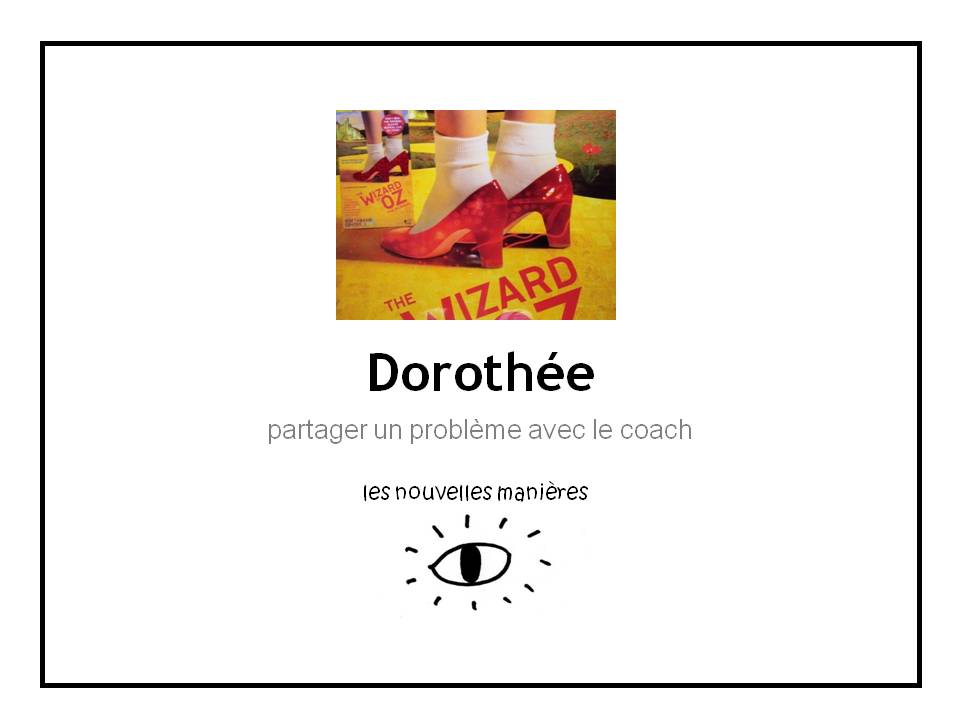
The Agile Fairytales will be making their second ever appearance in Paris next week. Join us at Agile France (formerly known as XPDay France) this Tuesday, 1 June 2010, for an adventure on the Yellow Brick Road to learn about Peer Coaching (‘La Route de Brique Jaune – De nouvelles manières de penser grâce au co-coaching’).
Places are limited to 18 so arrive early to get your place!
Monday, 24 May 2010

Imagine. It’s 3.35 pm on a warm summer’s afternoon in New England. I glance through the four-line subway map of Boston and what do I find at the end of the Blue Line? I rub my eyes with balled fists. There, plain as the nose on my face, is a stop named Wonderland. All my life, I’ve been convinced that Wonderland was a place of fiction. I was wrong. My heart’s aflutter. Wonderland exists. And it’s here. In Boston.
Now imagine this. What if not everything you believe in is true?
A week on and where do I find myself but at the doorstep of Arthur’s Seat? Have you noticed how we’re surrounded by stories straight out of books? Alas, that steep hearty 30-min climb is not for today. It’s pencilled for my next visit to Edinburgh. How much wonder have you experienced today?
Tuesday, 4 May 2010
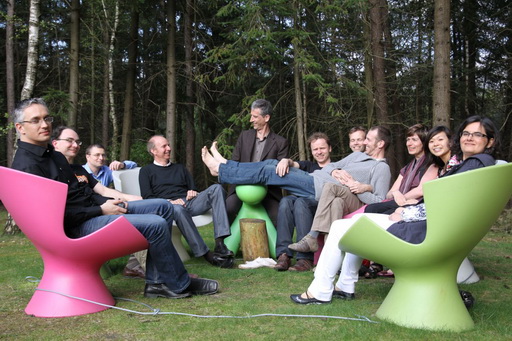
We hope to see you at XP Days Benelux, 25 – 26 November in Kappellerput in a sleepy town called Heeze (with a popular ice cream bar) in Eindhoven.
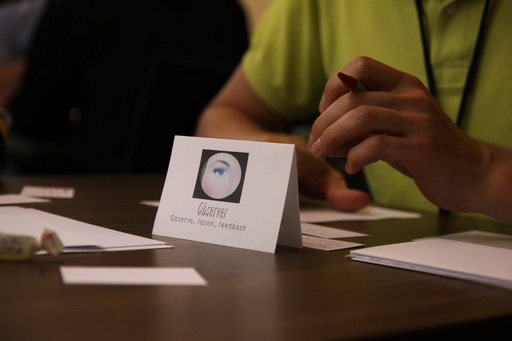
Thanks to Tjakko for the great close-up of the Observer role card from The Yellow Brick Road Game on Agile Adoption Through Peer Coaching!
Wednesday, 28 April 2010

The Marshmallow Challenge is a simple team exercise that requires a group of people to build the tallest possible structure out of 20 sticks of spaghetti, 1 yard of tape and 1 marshmallow placed on top.
Based on a talk by Tom Wujec on ted.com, business school students create some of the worst structures while kindergarten children rustle up the tallest and most innovative of standing structures. Unsurprisingly (and luckily), the winners are architects and engineers, people who have specialist knowledge in structural engineering.
So what does this challenge teach us? That building things iteratively brings us closer to success with every attempt we make. That prototyping works by helping us put Plan-Do-Check-Act into practice. That specialised skills plus facilitation gives us a greater chance of success. That keeping the goal in mind by testing your structure by placing the marshmallow on top as you evolve a structure is why kindergarten children do better than business school graduates. That fun is fundamental to the forming and continuous development of a healthy, well-functioning team. Put all these observations together and what do they spell? Yes! Agile Delivery in action.
Are you ready to take on the Marshmallow Challenge as a team?
Sunday, 25 April 2010
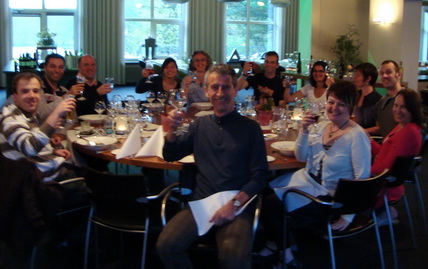
‘Tis the eve before the second Mini XP Days conference and I find myself thinking back to the first time I came across the XP Days Benelux conference. It was around 2 years ago. Pascal and I had just begun pairing on conference sessions and he happened to mention that XP Days Benelux as something he was involved in.
Needless to say, I had lots of questions such as ‘What makes the conference different from other conferences? What value could I add? How could I contribute?’ To which Pascal replied in his usual matter-of-fact way, ‘Vera and I started the conference because we needed a conference we wanted to go to near where we lived. You could help by making it a conference you want to go to, too.’
I accepted the invitation and began to contribute with baby steps, first by reviewing conference sessions, then by submitting my own and by helping out on the days of the conference. I’ve learnt so many things through helping out over the years.
1. A conference tells you a lot about the people who organise it. It’s difficult to distinguish between the organisers and the participants at XP Days Benelux. This is intentional. It highlights the fact that we all have something to learn from each other. Some presenters say that the feedback they get from the participants go a long way to amplify and accelerate their own learning.
2. Effective learning begins in an environment where everyone can be courageous. Many of the participants are equally as helpful and enthusiastic as those who organise the conference. It’s this sense of camaraderie, willingness to muck in and courage to expand one’s comfort zone, that has made this conference the kind of conference I thrive on participating in.
3. Self-organisation is a key characteristic of a successful team. I was able to witness self-organisation firsthand by working as part of the group of diverse volunteers. I noticed there was no one telling the others what to do. When I mentioned this to Pascal, he said, ‘It’s up to all of us to decide and agree on what we want to get out of the conference. Then we can decide how much and what we put in.’ That’s when I realised that there isn’t just one leader in a group. Everyone’s a leader. To be a good leader, you have to lead yourself first. It sounds simple, but it’s not easy.
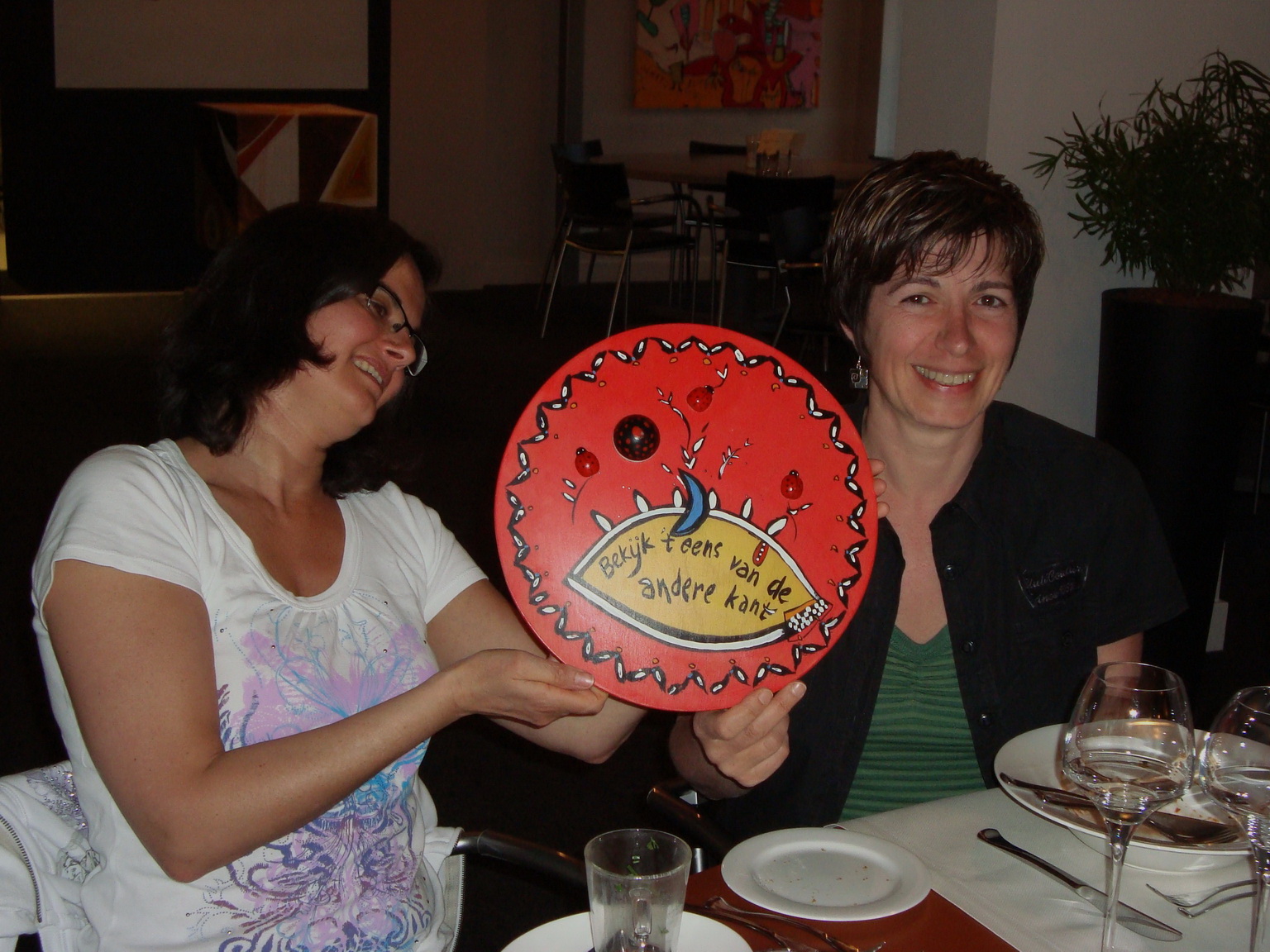
Participants of XP Days Benelux share a few common traits:
If you’re ready for this kind of learning, we hope to see you on Monday and, of course, at the 2-day XP Days Benelux conference on 25 – 26 November!